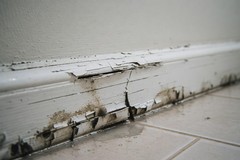
The baseboards in your bathroom sit at the exact place where moisture loves to collect: the low point where the floor meets the wall. Because they are painted, caulked, and often tucked behind a toilet or vanity, small problems can hide there for weeks before you ever notice them. If you have started asking yourself whether you are looking at water damage on baseboard in a bathroom? then you are already ahead of many homeowners who wait until the wood is soft and the paint is peeling. Catching the issue early is the difference between a quick fix and a costly repair, which is why property damage restoration in Boston, MA so often begins with a single warped strip of trim.
Bathrooms are humid by design, and that humidity finds its way into the smallest gaps. A slow leak under a sink, condensation from a toilet tank, or water splashing over the edge of a tub can all end up wicking into your baseboards. Once the moisture gets in, it does not simply dry out and disappear. It lingers behind the trim, feeds mold, and slowly breaks down the material that keeps your walls looking finished.
How to Tell if Your Baseboards Have Water Damage
Water rarely announces itself. Instead, it leaves clues that build up gradually. The earliest sign is usually discoloration, where the paint takes on a slightly darker or yellowed tone near the floor. From there, you may notice the paint starting to bubble, blister, or flake away from the wood underneath. These cosmetic changes are your first warning that moisture has settled in.
As damage progresses, the baseboard itself begins to change shape. Wood swells when it absorbs water, so you might see the trim cupping, warping, or pulling away from the wall. Pressing on the surface with your thumb is a quick test: healthy baseboard feels firm, while damaged material feels spongy or gives way easily. A musty odor that seems to hang near the floor is another strong indicator, since that smell almost always points to hidden moisture or the beginnings of mold growth.
Pay attention to the caulk line as well. When the seal between the baseboard and the floor or wall cracks and separates, it creates an open door for water to travel behind the trim. If you spot gaps, peeling caulk, or staining that extends onto the drywall above the baseboard, the problem has likely spread further than the surface suggests.
What Causes Water Damage on Bathroom Baseboards
Understanding the source matters, because repairing the trim without fixing the cause simply invites the damage to return. In most Boston homes, a handful of culprits are responsible. Plumbing leaks under the vanity or behind the wall are common, and they often go unseen until the water reaches the baseboard. Toilets are another frequent offender, whether from a failing wax ring at the base or condensation dripping off the tank in humid weather.
Everyday use plays a role too. Water that escapes the tub or shower, splashes onto the floor, and pools along the edge of the room will eventually soak into the trim. Poor ventilation compounds the problem, because a bathroom that cannot clear its humidity stays damp long after a shower ends. In older homes throughout Boston and the surrounding areas, aging grout, worn flooring seams, and settling walls all give moisture new paths to travel. When several of these factors combine, baseboard damage can appear surprisingly fast.
Why Small Baseboard Problems Turn Into Big Ones
It is tempting to dismiss a little peeling paint as a purely cosmetic issue. The trouble is that baseboards are porous, and once they absorb water, that moisture keeps moving into the wall cavity, the subfloor, and the framing. This is where the real cost hides. Prolonged dampness inside a wall creates ideal conditions for mold, which can spread across drywall and insulation before you ever see a spot on the surface.
Mold is not just a structural concern; it can affect indoor air quality and become a health issue for your household. If you suspect growth behind the trim, professional mold removal and remediation in Boston and beyond is the safest route, since disturbing contaminated material without proper containment can spread spores throughout the home. The longer water sits, the more likely a simple baseboard replacement turns into a project involving drywall, subfloor repair, and remediation. So when you find yourself dealing with water damage on baseboard in a bathroom? acting quickly protects far more than the trim itself.
Solutions and How the Repair Process Works
Fixing damaged baseboards follows a logical order, and skipping steps almost always leads to repeat problems. The first priority is always locating and stopping the water source, whether that means tightening a supply line, replacing a wax ring, or improving ventilation. Once the leak is under control, the affected area needs to dry completely before any rebuilding begins, because trapped moisture will ruin new materials just as it ruined the old.
Here is the general path a proper repair takes:
- Identify and correct the moisture source so the problem does not return.
- Remove damaged baseboard and inspect the wall and subfloor behind it.
- Dry the affected area thoroughly, using professional equipment when moisture has spread.
- Address any mold found during inspection before closing the wall back up.
- Install new baseboard, seal the joints with fresh caulk, and repaint to finish.
For minor surface damage caught early, a handy homeowner can sometimes manage the cosmetic repairs. But when the moisture has reached the wall or subfloor, or when the source is not obvious, bringing in a restoration team is the smarter choice. Professionals use moisture meters and thermal imaging to find water you cannot see, and they can handle both the drying and the reconstruction so the finished result matches the rest of your bathroom.
Preventing Future Baseboard Water Damage
Once your baseboards are restored, a little routine care goes a long way toward keeping them that way. Run your exhaust fan during and after every shower to move humid air out of the room. Inspect the caulk around your tub, toilet, and baseboards a couple of times a year, and reseal any spots where it has cracked or pulled away. Wipe up standing water promptly, and keep an eye on the area under your sink, since that cabinet often hides the first drops of a slow leak.
Checking behind the toilet and along the base of the vanity now and then can reveal trouble before it spreads. If your bathroom tends to stay damp, a dehumidifier or an upgraded exhaust fan can make a meaningful difference in how long moisture lingers. These small habits are far easier than another round of repairs.
Recognizing the warning signs early, discolored paint, warped trim, a musty smell, gives you the best chance to solve the problem before it reaches your walls and floors. When you catch water damage on baseboard in a bathroom? the goal is always to stop the source, dry everything out, and rebuild correctly so it stays fixed. Whether the issue is a minor leak or something that has spread further than expected, the same principles apply across Boston and neighboring towns.
If the damage looks like more than a weekend project, our team is ready to help with everything from moisture detection to full water damage restoration in Boston, and we also provide water damage restoration in areas like Newton. Reach out for a free assessment, and let us make sure your bathroom is dry, sound, and protected for the long run.