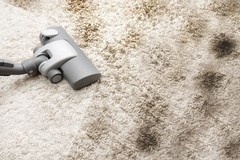
After a fire, few questions feel more pressing than what you can keep and what you have to throw away. Carpets are often right in the middle of that uncertainty. They absorb smoke, soot, water from firefighting efforts, and the sharp odor that lingers long after the flames are out. The good news is that carpet cleaning after fire damage is often possible, but success depends on how quickly and correctly the work is handled. At DryBoston, we provide disaster restoration services in Boston and its neighboring areas and have seen carpets that looked ruined come back to life, along with others that simply could not be saved.
Understanding the difference between the two can save you money, protect your health, and help you make smart decisions during an already stressful time. This guide walks you through what actually happens to carpet in a fire, which factors determine whether it can be restored, and why professional help makes such a difference.
What Fire Really Does to Your Carpet
Fire damage is rarely just about burns. In many cases, the carpet never touches an open flame at all, yet it still suffers significant harm. Smoke particles are extremely fine and work their way deep into carpet fibers and padding. Soot, which is the black residue left behind, is acidic and can permanently discolor or deteriorate materials if it sits too long. Then there is the water and chemical foam used to extinguish the fire, which soaks into the padding and subfloor and can lead to mold growth within a day or two.
Because of these layered problems, carpet damage is usually a combination of heat, residue, moisture, and odor. Each requires a different approach. A carpet that smells like smoke but shows no scorching may be fully recoverable. One that has melted fibers, saturated padding, or deep structural burns is a different story. This is why carpet cleaning after fire damage is never a simple matter of running a store-bought machine over the surface.
Factors That Determine Whether Carpet Can Be Saved
No two fires leave the same footprint, so restoration specialists evaluate several things before deciding whether to clean or replace. The type of carpet matters a great deal. Nylon and wool tend to respond better to professional cleaning than some synthetic blends, which can melt and warp at lower temperatures. The extent of exposure is equally important, since a carpet on the far side of the house may only need odor treatment while one near the source could be beyond repair.
Here are the key factors professionals weigh when assessing carpet after a fire:
- The degree of visible burning, melting, or charring in the fibers
- How deeply soot and smoke have penetrated the padding and backing
- Whether water or extinguishing chemicals saturated the material
- How much time passed before cleaning began
- The carpet's age, material, and overall condition before the fire
Time is often the deciding factor. Acidic soot and trapped moisture grow more destructive with every passing hour. Carpet that could have been saved on day one may be a total loss by the end of the week. That urgency is a big reason professional carpet cleaning after fire damage so often produces better results than waiting or attempting it yourself.
Why DIY Cleaning Usually Falls Short
It is natural to want to start cleaning immediately, but fire residue behaves differently than ordinary dirt. Rubbing soot with a wet cloth can smear it deeper into the fibers and set the stain permanently. Household cleaners are not formulated to neutralize acidic soot, and standard vacuums can push particles further down rather than removing them. Even the smell is deceptive. Smoke odor hides in the padding and subfloor, so a carpet may look clean while continuing to release that acrid scent for months.
There is also a health dimension. Soot contains fine particles and chemical byproducts that can irritate the lungs, eyes, and skin. Without proper protective equipment and ventilation, DIY cleaning can expose you to contaminants you cannot see. Professionals use specialized extraction equipment, air scrubbers, and cleaning agents designed specifically for fire residue, which is part of our broader approach to fire damage restoration in Boston.
How Professional Carpet Restoration Works
When our team arrives, the first step is a thorough assessment to decide what can realistically be saved. From there, the process generally moves through several stages. We remove any standing water or moisture from firefighting efforts, since lingering dampness invites mold and compromises everything else. Next comes dry soot removal using high-efficiency vacuums before any liquid cleaning begins, which prevents smearing the residue.
Once the loose particles are gone, we apply targeted cleaning solutions to break down acidic soot and lift embedded stains. Deep extraction follows, pulling contaminants out of the fibers and padding rather than pushing them around. Odor treatment is one of the most important final steps, because even perfectly cleaned carpet is worthless if it still smells like a fire. We use deodorizing agents and, when needed, specialized equipment that neutralizes odor at the molecular level instead of simply masking it. Throughout the process, we monitor moisture to make sure nothing is left damp enough to cause problems later.
Because fire often comes with water damage, the two problems frequently need to be addressed together. If firefighting left your floors and walls saturated, our water damage restoration in Boston and beyond goes hand in hand with carpet recovery to prevent secondary issues like mold and warping.
When Replacement Is the Smarter Choice
Sometimes the most honest answer is that cleaning will not be enough. If the carpet padding is saturated with soot and chemicals, if the fibers have melted or burned through, or if the backing has separated from the carpet, replacement is usually the safer and more economical path. Trying to save a carpet that is too far gone can leave you with lingering odors, hidden mold, and ongoing air quality concerns that cost more in the long run.
A professional assessment removes the guesswork. We will tell you plainly whether carpet cleaning after fire damage makes sense for your situation or whether you are better served by replacement and reconstruction. When flooring and other materials need rebuilding, our reconstruction services in the Boston area can restore the space completely so you are not left juggling multiple contractors.
Acting Quickly Protects Your Home and Your Budget
The single most valuable thing you can do after a fire is call for a professional evaluation as soon as the property is safe to enter. Early intervention expands your options, lowers the chance of permanent damage, and often reduces overall costs. Smoke and soot do not pause while you decide what to do, so the faster the cleaning process begins, the more likely your carpets and other belongings can be saved.
Whether you are dealing with a small kitchen fire or significant damage throughout the home, DryBoston serves Boston and the surrounding communities with experienced teams ready to help. We also handle fire damage restoration in Cambridge and nearby areas, bringing the same careful assessment and proven methods to every job. If you are unsure whether your carpets can be saved, reach out for a professional evaluation and let us help you take the next step with confidence.