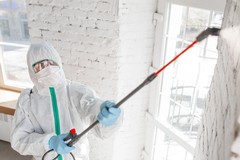
Mold can begin growing within 24 to 48 hours of a water event, which makes the hours right after a leak, flood, or burst pipe some of the most important for protecting your home. If you have ever cleaned up standing water and then worried about what might be quietly spreading behind your baseboards, you are not alone. One of the most common questions our team hears when we provide disaster restoration services in Boston and its surrounding areas is what to spray to prevent mold after water damage before it takes hold.
The good news is that the right product, applied to a properly dried surface, can go a long way toward stopping spores from settling in. The tricky part is that spraying alone is never a complete solution. Below, we break down the most effective options, how to use them safely, and where professional help makes the difference between a quick fix and a lasting one.
Why Spraying Matters After Water Damage
When water saturates drywall, wood, carpet padding, or insulation, it creates the exact conditions mold needs: moisture, organic material to feed on, and a comfortable temperature. Even after the visible water is gone, dampness lingers in porous materials and hidden cavities. That is why knowing what to spray to prevent mold after water damage is so valuable in those first couple of days.
An antimicrobial or mold-inhibiting spray does two things. It kills existing spores on the surface, and it leaves behind a residue that discourages new growth for a period of time. Think of it as a protective step that buys you time while the deeper drying process finishes. It is not a substitute for removing the moisture, but it is an important layer of defense when used correctly.
Effective Products to Consider
Several household and commercial solutions can help slow or stop mold after a water event. Each has strengths and limitations, so the best choice depends on the surface and the severity of the moisture problem.
- Distilled white vinegar: An affordable, low-toxicity option that can kill many surface mold species. Apply it undiluted, let it sit for about an hour, then wipe. It works best on hard, non-porous surfaces.
- Hydrogen peroxide (3 percent): A good choice for lighter cleaning and mild disinfecting. Spray, wait roughly ten minutes, then scrub gently. It is less harsh than bleach and safe on many materials.
- Commercial antimicrobial sprays: Products labeled specifically for mold prevention are formulated to leave a protective barrier. These are what professionals often reach for because they are designed for post-water-damage conditions.
- Baking soda solution: A mild option that also helps absorb odors. Dissolve a small amount in water, spray, and wipe. It is gentle enough for regular touch-ups.
A quick note on bleach. Many people assume bleach is the ultimate answer, but it is not always ideal for porous surfaces like wood and drywall. Bleach can remove surface staining without reaching the roots of mold that has penetrated deeper, and its water content can even add moisture to already damp materials. For hard, sealed surfaces it can be useful, but it is not a universal fix.
How to Apply Mold-Prevention Spray Correctly
The product only works if the surface is ready for it. Spraying an antimicrobial over a soaked, dripping wall accomplishes very little because the excess moisture dilutes the solution and keeps feeding potential growth. The sequence matters more than the specific bottle you choose.
Start by removing standing water and thoroughly drying the affected area with fans, dehumidifiers, and open windows when weather allows. Clear away any debris or loose materials that are clearly ruined. Once the surface is as dry as you can reasonably get it, apply your chosen spray evenly, giving it the recommended dwell time before wiping or letting it air dry. Ventilate the space well and wear gloves and eye protection, especially with stronger products. Finally, keep monitoring the area over the following days for any musty smell or discoloration, which can signal moisture you missed.
Understanding what to spray to prevent mold after water damage is only half the battle. The other half is confirming that the underlying material is truly dry, because moisture trapped inside walls or under flooring will keep the cycle going no matter how much you spray on the outside.
When Spraying Is Not Enough
Surface sprays are effective for small, contained incidents that you catch early, such as a minor sink overflow or a small window leak dried within hours. They fall short when water has reached inside wall cavities, beneath subflooring, or into HVAC systems. In those situations, mold can flourish in places a spray bottle will never reach.
If you notice a persistent musty odor, warping, staining that returns after cleaning, or visible growth spreading across more than a small patch, it is time to bring in professionals. Our team uses moisture meters, thermal imaging, and industrial drying equipment to find and eliminate hidden dampness. You can learn more about how we approach flood and water damage restoration in Boston and why fast, thorough drying is the real key to preventing mold.
For homes and businesses that already have an established problem, targeted remediation is the safer route. Professional mold removal and mold remediation in Boston and its neigboring towns addresses contamination at the source, contains spores so they do not spread during cleanup, and restores the space properly. Guessing at the extent of the damage often leads to repeat issues, which cost more in the long run.
Preventing Mold Beyond the Spray Bottle
Once the immediate threat is handled, a few ongoing habits keep mold from coming back. Controlling indoor humidity is one of the most effective long-term strategies, since mold struggles to grow when relative humidity stays below about 50 percent. A dehumidifier in basements and other damp-prone areas pays off quickly.
Beyond humidity, stay ahead of small leaks around plumbing, roofs, and windows, because a slow drip can do just as much damage as a dramatic flood when it goes unnoticed. Improve airflow in bathrooms, kitchens, and laundry areas with exhaust fans, and address any condensation on windows or pipes promptly. These simple measures reduce the moisture that mold depends on, so your prevention sprays have far less work to do.
If your property is in a flood-prone location or has experienced repeated water intrusion, consider a professional assessment. Our crew serves Boston and neighboring communities, and we can help identify vulnerabilities before they turn into major repairs.
The Bottom Line for Homeowners
Knowing what to spray to prevent mold after water damage gives you a practical head start, whether you reach for vinegar, hydrogen peroxide, or a dedicated antimicrobial product. The critical takeaway is that any spray works best on a surface that has already been dried, and that surface treatments cannot fix moisture trapped deep inside your home. Act quickly, ventilate well, and keep an eye on the area for any signs of returning growth.
When the damage is more than a small spill, or when mold keeps coming back despite your efforts, professional help protects both your property and your health. If you need thorough drying, inspection, or remediation, our team offers dependable mold removal and remediation in Braintree, MA and throughout the region. Reach out for a free assessment, and let us help you keep your home dry, healthy, and mold-free.