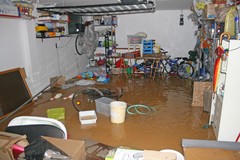
Few household emergencies feel as overwhelming as walking downstairs to find dark, foul water spreading across the floor. Sewage backups are more than an unpleasant mess. They carry bacteria, viruses, and other contaminants that can put your family's health at risk within minutes of exposure. If your basement floods with sewage, what you do in the first hour matters enormously, both for safety and for limiting the long-term damage to your home. That is where fast, professional property damage restoration in Boston and the neighboring regions becomes essential.
The instinct for many homeowners is to grab a mop and start cleaning. Unfortunately, sewage flooding is not a job for household supplies, and treating it like ordinary standing water can expose you to serious hazards. Below, we walk through the safety steps that should come first, so you can protect the people in your home before worrying about the property itself.
Stop and Assess Before You Step In
The single most important rule with any sewage flood is to stay out of the water until you understand what you are dealing with. Contaminated water, often called black water, can carry E. coli, hepatitis, and other pathogens. It may also be hiding submerged hazards like sharp debris or, more dangerously, live electricity if the flooding has reached outlets, appliances, or the electrical panel.
Before anyone enters the basement, take a moment to look for signs that electricity is still active near the water. If you can safely reach your main breaker without stepping into or near the water, shut off power to the affected area. If the panel itself is in the flooded zone or you have to wade through water to reach it, do not attempt it. Call an electrician or your utility provider instead. No cleanup is worth the risk of electrocution.
Get People and Pets to Safety
Once you recognize that your basement floods with sewage, treat the entire lower level as a contaminated zone. Keep children and pets far away from the area, since they are especially vulnerable to the bacteria present in sewage and far less likely to understand the danger. Close doors leading to the basement to keep contaminated air and odors from drifting into living spaces.
If you or anyone in the household has open wounds, a weakened immune system, or a respiratory condition, stay out of the space entirely. The airborne particles and gases released by sewage can aggravate breathing problems quickly. When in doubt, the safest move is to wait outside the affected area and let trained professionals handle the entry and assessment.
Protect Yourself If You Must Enter
Sometimes you need to briefly enter the basement to shut off a water source or check on the situation. If that is unavoidable, do not go in unprotected. Proper personal protective equipment is not optional when dealing with raw sewage, and even a short exposure can transfer contaminants to your skin, eyes, or clothing.
At minimum, protect yourself with the following before any brief entry:
- Waterproof, non-porous gloves that cover your forearms
- Rubber boots that keep your feet and lower legs dry
- Eye protection and, ideally, an N95 or better respirator mask
- Clothing you are prepared to discard or wash separately in hot water afterward
After any contact with sewage water, wash thoroughly with soap and warm water, and avoid touching your face until you have done so. These precautions sound extreme, but the reality is that sewage exposure is a genuine biohazard, and it deserves that level of caution.
Stop the Source and Limit the Spread
If the backup is coming from a plumbing failure inside your home rather than a municipal sewer issue, try to identify and stop the source. Turn off the main water supply if a burst pipe or overflowing fixture is feeding the problem. Avoid running any water in the house, including flushing toilets or using sinks, since additional flow can worsen the backup while the drain line is compromised.
Do not attempt to unclog a main sewer line yourself during an active flood. Chemical drain cleaners are ineffective and dangerous in these situations, and forcing water through a blocked line can cause more contaminated water to surge back into your home. This is the point where professional help pays off. Our team can address the underlying blockage through emergency plumbing in Boston and beyond while also beginning the extraction and cleanup process, so the problem is solved from both ends at once.
Document the Damage for Insurance
Before cleanup begins, and once you can do so safely, take clear photos and videos of the flooding and any affected belongings. This documentation is important for your insurance claim, and waiting until after cleanup often means losing evidence of the true extent of the damage. Note the water level, damaged furniture, and any structural areas the water has reached, such as walls and flooring.
Contact your insurance provider promptly to understand your coverage and reporting requirements. Many homeowners are surprised to learn what is and is not covered when a sewage backup occurs, so early communication helps you avoid unwelcome surprises later. A reputable restoration company can also work directly with your insurer to document the scope of work and streamline the claims process.
Why Professional Cleanup Matters
Even after the visible water is gone, sewage flooding leaves behind contamination that ordinary cleaning cannot address. Porous materials like drywall, carpet, insulation, and wood can absorb bacteria-laden water, and if they are not properly cleaned, removed, or disinfected, they become breeding grounds for mold and lingering odors. Moisture trapped in walls and subflooring often leads to structural problems and health concerns weeks after the initial flood.
Professional restoration goes well beyond extraction. The process involves thorough sanitizing, industrial drying, air quality treatment, and often the removal of unsalvageable materials, followed by rebuilding. Because sewage is classified as a biohazard, specialized biohazard cleanup in Boston, MA ensures the space is safe to occupy again rather than merely looking clean. Left untreated, hidden moisture frequently develops into a mold problem that requires separate remediation down the line.
When your basement floods with sewage, timing is everything, and a coordinated response prevents a bad situation from getting worse. Our crews are equipped to handle extraction, disinfection, drying, and any needed reconstruction, restoring both safety and peace of mind. If you are outside the city, we also provide storm damage repair in Braintree and surrounding communities, so help is never far away.
The bottom line is simple. Protect people first, avoid direct contact with contaminated water, stop the source if you safely can, and bring in trained professionals as soon as possible. A sewage flood is not the moment to improvise. If your basement floods with sewage, reach out to our team for a fast response, and let experienced technicians take the risk and the guesswork out of your hands so your home can be safe, clean, and dry again.